Showing posts with label International Brotherhood of Magicians. Show all posts

Thursday, November 22, 2018

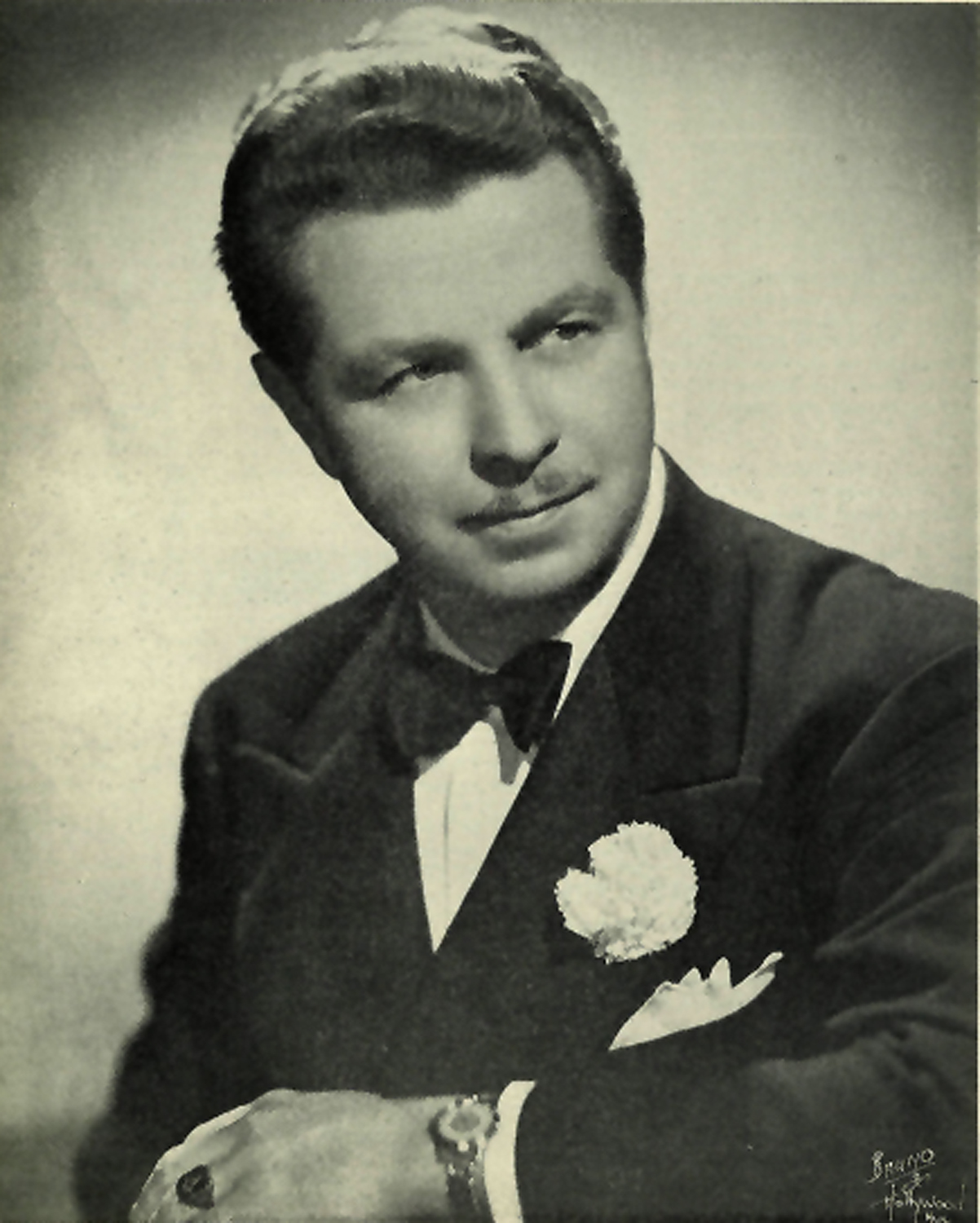
Harry Baker

Harry Baker was born in Chicago and raised in the entertainment field. His father was a professional acrobat. Baker was once known as the “White House Magician” in the late 1930’s as well as performing for President Harry Truman. Baker received the rank of army captain and earned a Commendation for his knowledge in the U.S. Army Film Laboratory. He was the past president of the Washington Assembly No. 23, an active member of the Magicians Guild (He is the first member of the Guild to win an "Oscar" in magic), and a member of the International Brotherhood of Magicians, the past president of the Magicians Alliance of the Eastern States. Baker was also the President of the Magic Dealers Association, Atlantic Regional Vice President of S.A.M., and a chairman of the S.A.M.’s 1946 conference in Washington DC.

He won the "Caryl Fleming Trophy" with his original "Mind Reading Rabbit" effect in which, a live rabbit in an Indian basket produces a previously chosen card instead of the snake. His style of comedy and magic was original entertaining. Performed in various states on the east coast as far south as Florida and Georgia. He was always pitching the International Brotherhood of Magicians club.
Baker owned a magic shop in Washington, D.C. at 924 17th Street N.W. that he opened in 1947. The magic shop was a popular place for fellow performers and friends to drop in see Baker and his able assistant (and “Miss Magic of 1948”) Dolly Snow. The shop was a favorite spot for master magician Harry Blackstone. During one of Blackstone’s performance in D.C., magicians were always at a loss when they attempted to visit him at the theater. They would call on him and the stage manager would have to let them know, he wasn’t there. Baker finally had to tell his disappointed friends where the elusive master performer disappeared to once the show was reset for the next performance. While performing in D.C. Blackstone would drop by Baker’s shop to not only talk magic, but also was Baker’s best magic demonstrator.


Baker was known throughout the magic community for his performances, his articles (check out the article in The Conjuror’s Magazine in the 1940’s like “Eggs – Act ­– Ly), and his involvement in magic as a whole continued to fulfill his life. In 1950, Baker had a weekly fifteen-minute kid’s show sponsored by the local dairy television show on WMAL-TV, Washington. Harry Baker passed away in 1961. Baker’s assistant and “Girl Friday” Dolly Snow kept the shop open for business after his passing.

Tuesday, October 24, 2017

Loring Campbell


Alexander Loring Campbell was born on March 19, 1905 in Sapulpa, Oklahoma where in just a few short years, the senior A.L. Campbell and his wife Byrd closed the drug store, packed up their belongings, and had their son comfortably set up in the back seat of the family car for the long trip to Southern California. Loring’s first exposure to magic was watching a group of Japanese performers known as the Ten’ichi Troupe of magicians. It wasn’t long after that Loring tapped by the “Goddess of Magic” and she didn’t let go.

    
  Whether it was entertaining classmates, or working a summer performance in full make-up in a polka dotted suit being billed as “Cambello the Clown”; Loring was fulfilling his destiny to become a full-fledged, professional magician.
After his schooling, Loring captured the attention of the managers of the Redpath-Horner Chautauqua circuit. He was contracted to work a twenty-five week tour. The only condition he had to agree to was being billed as magician Jack Gwynne. Gwynne wasn’t able to complete his contract and it was too late for the management company to alter the advertisements that were in the hands of every place Loring was to perform. So, taking everything in the old adage “the show must go on”, Loring Campbell was “Jack Gwynne”.


 A little known fact in magic history was when in 1929, Howard Thurston was searching for “one more traveling company” to take another one of his sponsored shows out along with his own show, and the Dante and Tampa show; Loring was also in the running. He readily declined, just as McDonald Birch, Werner "Dorny" F. Dornfeld, George Marquis and  Jack Gwynne. This time, Thurston has decided the name for the magician under the Thurston banner would be "Faust the Magician". All declined for the similar reasons; they wanted to keep their name and they their own performance style. When the International Brotherhood of Magicians was founded, Loring joined and was member number twenty-two. He did all that he could to find more members to join this newly established society of magicians wherever he traveled. Loring wasn’t alone in this life adventure, his wife Kathryn was at his side working in the show, on the show, and keeping the show going for many years. Kathryn kept the bookkeeping details kept the rabbits fed, and made sure Loring was on top of his game wherever they performed.

    
They toured throughout the United States dozens of times. Audiences and managers alike praised their magic shows. Loring included numerous effects from sleight of hand, to a presentation of the guillotine, and he would also include escapes. Their two-hour show would change every year and Loring would keep in touch with magic dealers and include whatever the latest effects were popular. He would also update his brochures and posters making sure he would keep the attention on the idea of fun for the entire family. 

          
How could you pass up
seeing this show?


       Whether Loring was performing his noted ventriloquist act with his sidekick, Johnny Applewood, or he stepped up to the artist’s easel and created wonderful rag pictures for all to enjoy; Loring had found his life’s dream and it did come true. He was a member of Los Magicos of Hollywood, Society of American Magicians, and he was a member of the Hollywood Comedy Club. 

           Loring wrote a column for the Tops Magazine titled “The Campbell Caravan” that was enjoyed by all its subscribers. He was elected into the Society of American Magicians Hall of Fame. Loring wrote two books This is Magic in 1945 and Magic That Is Magic in 1946. He retired from the stage in 1955. Kathryn passed away in 1958. Loring continued his interest in magic always there helping other performers and keeping in touch with magic friends he had met for the many years he was on the road. Loring passed away on January 11, 1979.

Sunday, July 9, 2017

A. Coke Cecil


Interesting illusion back design. Leave it to Coke to select something different.

Alphius and Chloina Cecil had a son named Coke Amos Cecil and he was born in 1897. Throughout Coke’s life was filled with magic. He moved to High Point, North Carolina shortly after his father passed away in 1917. He and his wife, Louise were settling down in the house on Rockford Road enjoying their first few years of marriage. Coke opened Cecil’s Drug Store in 1925 and at the same time, he was performing his show at schools, churches, clubs, and fraternity clubs. In 1930, when the census was being taken and Coke changed his name on the census to A. Coke Cecil and that was what he used the rest of his life.


Coke Cecil constructed a theater in his home basement, complete with curtain and stage, with a seating capacity of fifty. In 1946 began the Cecil's Office Equipment Company as owner-manager. He served in sev­eral offices in magic affairs and was well known throughout the area for his performances for charity. It was said he had a great Medicine show vent routine that was a showstopper. He also was interested in the MAES conven­tions, and attended a number of the International Brotherhood of Magicians' conventions. He was on the advisory and show com­mittee of the Southeastern Magicians Convention. Also, he was IBM Territorial Vice President for North Carolina and was well known throughout the area for his performances for charity. He was IBM Member 4879 and a member of Ring 144 Greensboro, NC. At the Davenport, Iowa Convention in 1940, there was a new trophy A. Cecil Coke Trophy being presented for performers (excluding dealers and professionals) who earned most of their living from magic. The first winner of the trophy for best presentation was Robert Parrish.
On his was way home, Coke was returning from Helfin, Alabama with his assistant Barbara Belesky when a car hit Coke’s panel van on June 1, 1958. The other driver and Belesky survived. Unfortunately, Coke did not. He was gen­tleman, magician and friend.

Sunday, July 2, 2017

Gene Gordon


Gordon Eugene Avery was born October 15, 1903 in Albany New York. He used the name “Gene Gordon” from the age of seven. The family moved to Lyons, New York, where Gene started his first magic club, the Wayne Wizards' Association. In the 1920’s, he worked the school circuit, assemblies, theaters, and special events. 

One the numerous performances Gene had in 1927.

Also, in the 1920’s Gene got together with Len Vintus and recruited Ernest Schieldge to create the International Brotherhood of Magicians and The Linking Ring. In the 1930’s, you would have found Gene on the cruise ship circuit.

The back design of this card is the Bicycle's Cupid #21.

Saturday, July 1, 2017

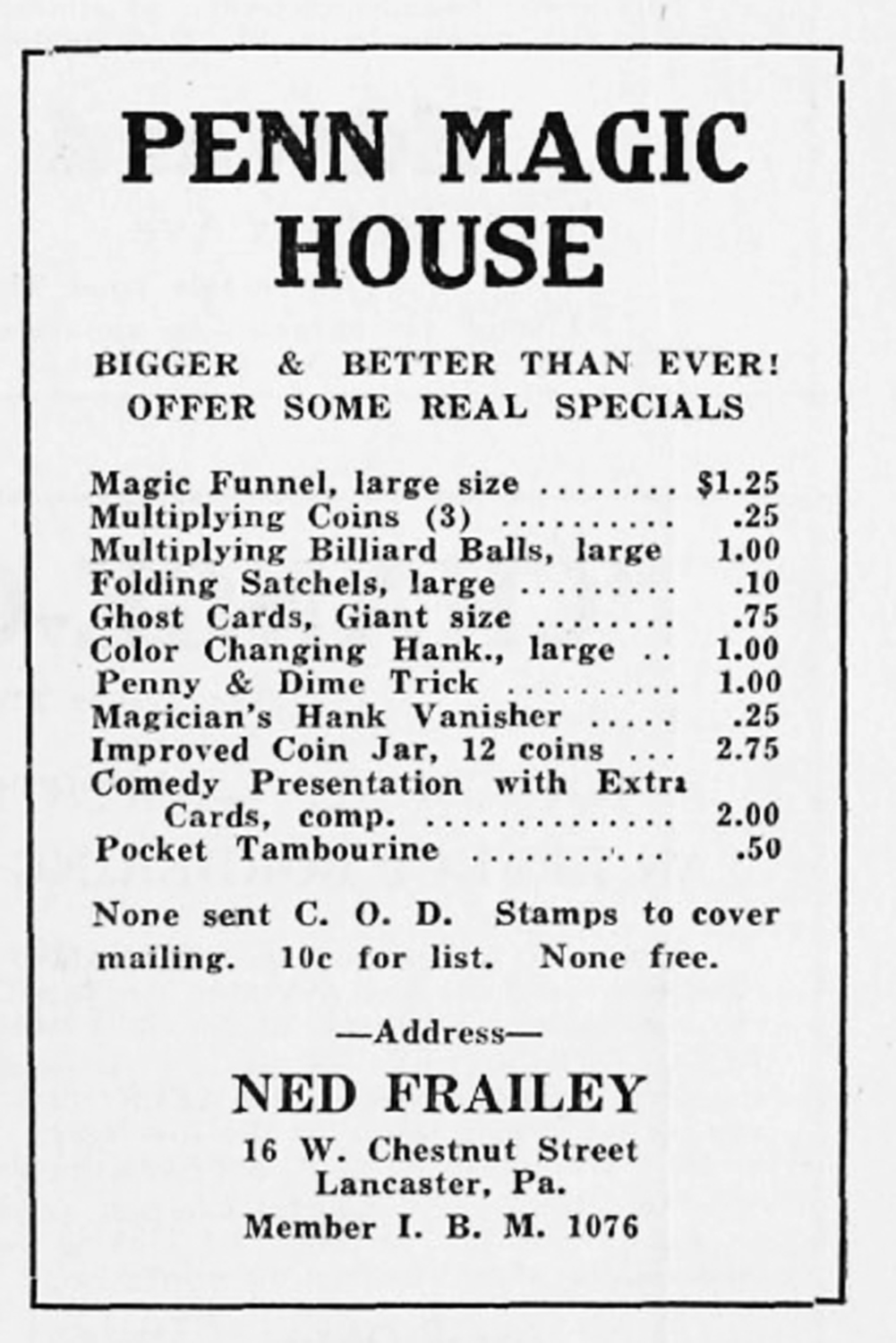
Ned H. Frailey


The back of this card is Bicycle's Rider back design.


Nathan H. “Ned” Frailey

Monday, June 26, 2017

Leslie Guest


Leslie Pierce Guest was born on September 6, 1898 in Pelham, New York. He caught “the bug” of magic when he was eleven. Guest continued his interest in magic throughout his schooling, which included the University of Michigan and the College of the City of New York where he earned his Bachelor of Science Degree. 

After finishing college, Guest moved to Cincinnati,

Sunday, April 23, 2017

Elmer Eckam


Elmer G. Eckam was born in May of 1892 in Rochester, New York. Eckam’s first stage work was working as the assistant as a teenager with fellow Rochester magician Ray Hogan (1886 – 1945). Eckam performed for over forty years. He gained experience after leaving the auspices of Hogan by working the Chautauqua and Lyceum circuits as well as many of the theatres and clubs. By the Twenties, Eckam had his own unique act that included escapes. The full evening show was performed at national and state conventions in the East and Midwest. He was well liked by magicians and was a friend to fellow performers like Harry Houdini and Harry Blackstone. At the 1927 I.B.M. Convention in Kenton, Ohio, Eckam thrilled the over one thousand participants by escaping from a straight jacket while being suspended fifty feet in the air. Eckam published a magic newspaper titled, Eckam’s Echo from 1937 to 1940. He also had a mail order magic business from his home in Rochester that he called “Art in Magic”.